Have you ever received an emoji and wondered what the sender was trying to say? A simple 🙂 can feel friendly in one message and sound cold or sarcastic in another. Hearts, laughing faces, hand gestures, and newer internet slang can also carry meanings that are not obvious at first.
This emoji meaning guide explains popular emojis in simple English, including their common meanings, uses in texting, and meanings on social media. You will find real message examples, comparisons between similar emojis, popular combinations, and practical tips to help you read the tone of a conversation.
Key Takeaways
- Emojis help people express feelings, reactions, ideas, and humor.
- One emoji can have several meanings depending on the message.
- Face emojis often show emotions, while hearts can express love, care, or friendship.
- Some emojis have slang meanings that differ from their literal appearance.
- Emoji combinations can communicate a complete idea or reaction.
- The same emoji may look different on different phones and apps.
- Read the full message before deciding what an emoji means.
What Is an Emoji Meaning Guide?
An emoji meaning guide is a reference that explains what emojis represent and how people use them in digital conversations. It helps readers interpret faces, hearts, hand gestures, animals, objects, and symbols.
An emoji can have a literal meaning and a social meaning. For example, 💀 represents a skull, but in casual online conversations, it can mean that something is extremely funny. The intended meaning depends on the message and the people communicating.
A useful guide should explain three things:
- Basic meaning: What the emoji shows or represents.
- Common use: How people use it in messages, comments, and captions.
- Contextual meaning: How the tone may change with the situation.
Popular Emojis and Their Meanings
Here is a quick emoji meaning list to help you read common messages.
| Emoji | Common meaning | Example use |
|---|---|---|
| 😀 | Happiness or excitement | Great news! 😀 |
| 😂 | Strong laughter | That joke was hilarious 😂 |
| 🥹 | Feeling touched or emotional | You remembered my birthday 🥹 |
| 😊 | Warmth or friendliness | Thanks for helping me 😊 |
| 😍 | Love or admiration | This dress is beautiful 😍 |
| 🥰 | Affection and warmth | I had a lovely time with you 🥰 |
| 🤔 | Thinking or questioning | Are we sure about this? 🤔 |
| 🙄 | Annoyance or disbelief | Here we go again 🙄 |
| 😭 | Sadness or overwhelming emotion; sometimes laughter | That video is too funny 😭 |
| 💀 | A skull; often laughter or shock in slang | I cannot believe he said that 💀 |
| ❤️ | Love, care, or support | Love you! ❤️ |
| 💔 | Heartbreak or sadness | I miss those days 💔 |
| 🙏 | Prayer, thanks, or a request | Please wish me luck 🙏 |
| 👍 | Approval or acknowledgment | Sounds good 👍 |
| 🔥 | Fire, excitement, or a strong compliment | Your new haircut is 🔥 |
| 👀 | Interest, curiosity, or watching | Tell me more 👀 |
| ✨ | Sparkle, excitement, or emphasis | A fresh start ✨ |
| 🎉 | Celebration | We passed the exam! 🎉 |
These are common interpretations, not fixed rules. Some people use an emoji differently from others.
Common Categories of Emoji Meanings
Grouping emojis by type makes them easier to find and use.
1. Face Emojis and Reactions
Face emojis often show feelings or reactions. They can express happiness, sadness, surprise, confusion, embarrassment, or sarcasm.
Examples: 😀 😂 🥹 😢 😱 🤔 🙄
- 😀 shows happiness or excitement.
- 😂 expresses strong laughter.
- 🥹 can show gratitude, joy, or being moved.
- 😢 often expresses sadness.
- 😱 shows shock, fear, or surprise.
- 🤔 suggests thought or doubt.
- 🙄 often signals annoyance or disbelief.
Example Message: That was the funniest thing I have seen all week 😂
Meaning: The sender found something very funny.
Best Used For: Jokes, amusing stories, and funny videos.
2. Heart Emojis and Emotional Expressions
Heart emojis can express love, friendship, kindness, support, or sadness. Their colors may add a different tone, but they do not have one universal meaning.
Examples: ❤️ 🩷 🧡 💛 💚 💙 💜 🖤 🤍 💔
| Emoji | Common interpretation |
|---|---|
| ❤️ | Love, deep affection, or support |
| 🩷 | Sweet affection or care |
| 💛 | Warmth, happiness, or friendship |
| 💙 | Care, loyalty, or support |
| 💜 | Affection, support, or fandom |
| 🖤 | Dark style, sadness, or affection |
| 🤍 | Care, peace, or gentle affection |
| 💔 | Heartbreak or emotional pain |
Example Message: Thank you for always being there for me 🤍
Meaning: The sender is expressing care and appreciation.
Best Used For: Messages to friends, family members, partners, or people who need support.
3. Hand Gestures and Body Language Emojis
Hand emojis can show agreement, gratitude, greetings, encouragement, and other actions.
Examples: 👋 👍 👎 🙏 👏 🤝 🫶 💪
- 👋 means hello or goodbye.
- 👍 often means okay, approval, or agreement.
- 🙏 can express prayer, thanks, or a polite request.
- 👏 shows applause or appreciation.
- 🤝 represents agreement or cooperation.
- 🫶 expresses love, care, or support.
- 💪 can represent strength, effort, or encouragement.
Example Message: You worked so hard for this. You deserve it! 👏
Meaning: The sender is praising someone’s effort or success.
Best Used For: Congratulations, encouragement, appreciation, and everyday replies.
4. Animals, Nature, Food, and Object Emojis
These emojis can represent real objects, activities, interests, or ideas. Some also have slang meanings.
Examples: 🐶 🌸 🌈 🍕 ☕ 🔥 💎 👑
- 🐶 can represent dogs, pets, or something cute.
- 🌸 can suggest flowers, spring, or beauty.
- 🌈 can represent a rainbow, hope, or pride in some contexts.
- 🍕 represents pizza or a meal.
- ☕ can refer to coffee or a casual invitation to meet.
- 🔥 can mean fire or something impressive.
- 💎 can suggest jewelry, value, or quality.
- 👑 can represent a crown, status, or praise.
Example Message: Your artwork is absolutely 🔥
Meaning: The sender thinks the artwork is excellent.
Best Used For: Compliments, hobbies, food posts, travel captions, and creative content.
What Do Emojis Mean in Texting?
In texting, emojis help show tone that may be missing from plain words. They can make a message seem warmer, funnier, more caring, or more playful.
Some emojis also have meanings that go beyond their pictures.
- 💀: Often means something is extremely funny or shocking.
- 😭: Can express real sadness, laughter, or feeling overwhelmed.
- 🧢: Can mean a lie or an exaggerated claim in slang.
- 🔥: Can describe something excellent, exciting, or attractive.
- 💅: Can suggest confidence, sass, or an unbothered attitude.
- 👀: Can show curiosity, interest, or a desire to hear more.
- ✨: Can add emphasis, excitement, or an ironic tone.
Example Conversations
Conversation 1: A Funny Message
Alex: I walked into the wrong classroom and sat there for ten minutes.
Sam: No way 💀
Meaning: Sam finds the situation funny or surprising. The skull is not a literal reference to death.
Conversation 2: A Friendly Message
Mia: I got the job!
Jordan: I’m so happy for you! 🥹❤️
Meaning: Jordan feels happy for Mia and may be emotionally moved by the news.
Conversation 3: A Casual Reply
Chris: I’ll send you the notes tonight.
Taylor: Thank you 🙏
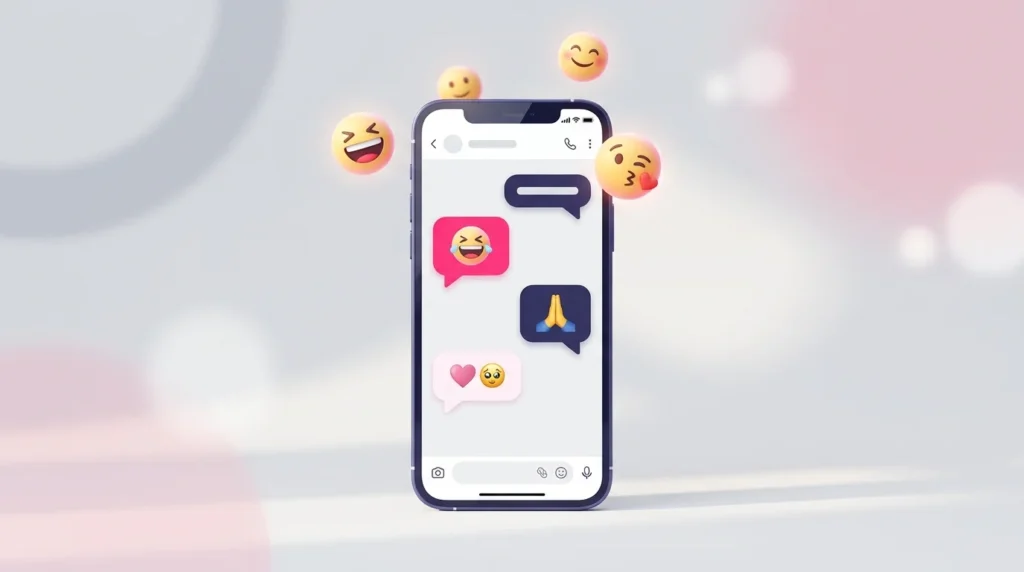
Meaning: Taylor is showing gratitude. The folded hands may also suggest a polite request or prayer in other settings.
How Context Changes Emoji Meanings
An emoji rarely tells the whole story by itself. The words around it, the relationship between the people, and the situation all help reveal its likely meaning.
The Same Emoji Can Have Different Meanings
Consider the slight smile emoji 🙂.
| Message | Possible interpretation |
|---|---|
| Thanks for your help 🙂 | Polite or friendly |
| Sure, whatever 🙂 | Possibly annoyed or sarcastic |
| See you tomorrow 🙂 | Calm and friendly |
| I already told you 🙂 | Could sound impatient, depending on the relationship |
The emoji alone does not prove that someone is angry. The rest of the conversation matters.
Age Groups and Online Slang
People in different age groups and online communities may use emojis differently. For example, some people use 😂 for ordinary laughter, while others prefer 💀 to show that a joke is extremely funny.
Neither choice is automatically right or wrong. Personal habits, friendships, and online communities all affect how emojis are used.
Culture and Personal Meaning
A gesture that seems clear to one person may be read differently by another. The folded hands emoji 🙏, for example, can express prayer, gratitude, or a polite request.
If you are unsure, read the words carefully instead of assuming that the emoji has one fixed meaning.
Similar Emojis Compared
Some emojis look alike or express related feelings. These comparisons can help you choose one that fits your message.
| Emoji | Main meaning | Difference |
|---|---|---|
| 😀 | Happiness | An open, cheerful expression |
| 😊 | Warmth | Often feels softer or more gentle |
| 😂 | Laughter | Shows that something is funny |
| 🤣 | Intense laughter | Often suggests even stronger amusement |
| 😢 | Sadness | A more direct crying expression |
| 😭 | Strong emotion | Can mean sadness, laughter, or being overwhelmed |
| ❤️ | Love or support | A classic red heart |
| 💔 | Heartbreak | Suggests emotional pain or loss |
| 😉 | Wink | Can be playful, teasing, or flirty |
| 😏 | Smirk | Can suggest confidence, mischief, or flirtation |
These differences are common patterns rather than strict rules. A person’s usual texting style can matter more than the emoji itself.
Popular Emoji Combinations and Their Meanings
When people place emojis together, they can create a short visual message. The combination may express a feeling more clearly than one emoji alone.
| Combination | Common meaning | Example use |
|---|---|---|
| ❤️🥰 | Love and affection | Thinking of you ❤️🥰 |
| 😂💀 | Extreme laughter | That joke 😂💀 |
| 🥹🫶 | Feeling touched or supported | You are so kind 🥹🫶 |
| 🔥💯 | Something excellent | Your performance was 🔥💯 |
| 👀🍿 | Watching drama or waiting for events | This story is getting interesting 👀🍿 |
| 🎉🥳 | Celebration | We did it! 🎉🥳 |
| 🙏❤️ | Gratitude, prayer, or care | Thank you for your support 🙏❤️ |
| ✨🩷 | Sweet, positive, or stylish mood | A little happiness ✨🩷 |
A combination can also be an inside joke between friends. Do not assume that every pair of emojis has a secret meaning.
How to Reply to Common Emojis
Your reply should match the tone of the original message. Here are some simple ideas.
| Emoji received | Possible reply |
|---|---|
| ❤️ | Love you too! |
| 😂 | I knew you’d laugh! |
| 🥹 | That means a lot to me. |
| 🙏 | You’re welcome! |
| 👀 | What do you want to know? |
| 🔥 | Thank you! |
| 🎉 | Thank you for celebrating with me! |
| 🫶 | Sending love back! |
If you cannot tell what someone means, ask a friendly question. For example, you could say, “What did you mean by that emoji?” This is often better than guessing, especially during a serious conversation.
How to Find the Meaning of Any Emoji
Use these steps when you come across an unfamiliar emoji.
- Look at the picture. Identify the face, object, gesture, or symbol.
- Read the full message. The words may explain why the sender chose it.
- Consider the situation. A joke, a birthday wish, and a serious conversation call for different interpretations.
- Check related emojis. Similar faces or symbols may help explain the intended tone.
- Ask if needed. If the message is unclear, let the sender explain.
You can also use this guide as a starting point for finding meanings by category. Look for face emojis when interpreting reactions, heart emojis when reading emotional messages, and gesture emojis when a message includes a hand sign.
Why the Same Emoji May Look Different on Different Devices
An emoji sent from an iPhone may look slightly different on an Android phone or computer. The design depends on the device, operating system, app, and emoji font.
The basic symbol may remain the same even when its colors, shape, or expression look different. If an emoji appears as an empty box, the device or app may not support that character.
Frequently Asked Questions About Emoji Meanings
1. What is an emoji meaning guide?
An emoji meaning guide explains what different emojis represent and how people use them in messages. It covers common meanings, emotional tones, slang, and examples of everyday use.
2. Do all emojis have one fixed meaning?
No. An emoji can have several meanings based on the message, culture, relationship, and online community. The same symbol may express happiness in one conversation and sarcasm in another.
3. How can I find out what an emoji means in a text?
Read the message around the emoji and consider the situation. Think about how the sender usually communicates. If the meaning remains unclear, ask them directly.
4. What are the most common types of emojis?
Common types include faces, hearts, hand gestures, animals, food, objects, flags, and symbols. Each group can express feelings, actions, ideas, or everyday activities.
5. Why do some emojis have slang meanings?
People often give familiar symbols new meanings through online conversations, jokes, and social media trends. For example, 💀 can mean that something is extremely funny rather than refer to death.
6. Do heart colors have different meanings?
Yes, people often use heart colors to suggest different feelings or styles. Red commonly expresses love, while white can suggest care or peace. These meanings are flexible and can vary between people.
7. Can an emoji tell me if someone likes me romantically?
An emoji may show affection or interest, but it cannot confirm romantic feelings on its own. Look at the person’s words, actions, and overall communication before drawing a conclusion.
8. Why do emojis look different on different phones?
Devices and apps use their own emoji artwork. This can change the appearance, color, or expression of a symbol even when the underlying emoji is the same.
Conclusion
An emoji meaning guide helps you read the faces, hearts, gestures, and symbols people use every day. Emojis can express happiness, love, sadness, humor, support, and many other feelings. Learning their common meanings can make texting and social media conversations easier to follow.
The best way to interpret an emoji is to read it with the full message and consider who sent it. Avoid making big assumptions based on one symbol. When the meaning is unclear, a simple question can prevent confusion and help keep the conversation friendly.

James Whitmore is an emoji meanings writer at Emojixa.com. He writes simple guides about emoji meanings, texting expressions, and emoji combinations to help readers understand how emojis are used in everyday conversations, friendships, and relationships.