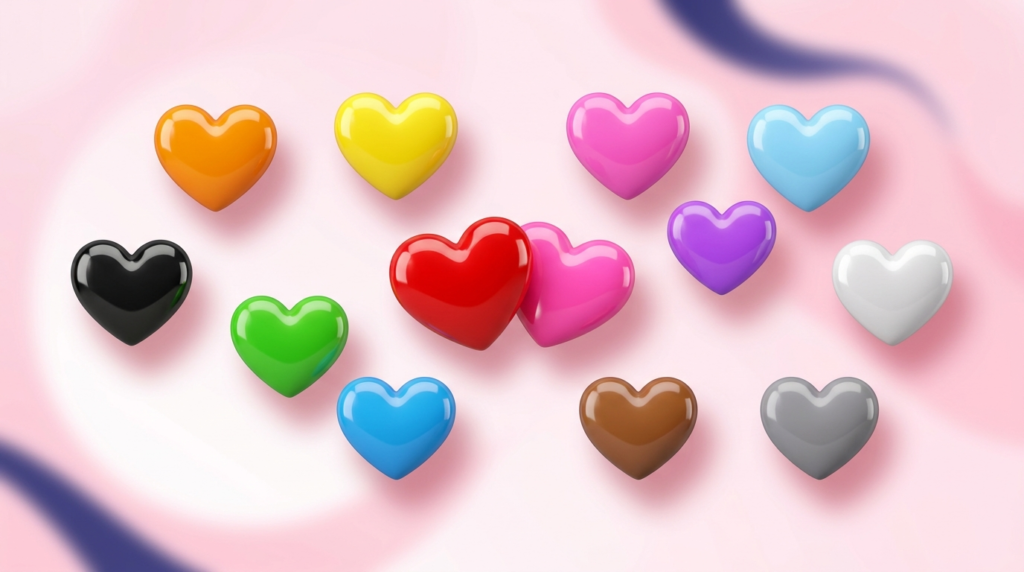
Have you ever received a ❤️, 💛, or 💜 in a text message and wondered why someone chose that color? Heart emojis can express love, friendship, care, support, and many other feelings. The meaning of each color can change depending on who sends it and what the conversation is about.
The emoji heart color meaning usually depends on the color, the relationship between the people, and the message itself. A red heart often shows love, a yellow heart can express friendship, and a black heart may show dark humor or sadness. Below, you’ll find the common meanings of each heart color, examples from real-life texting situations, and tips for choosing the right heart.
💗 Key Takeaways
- ❤️ Red heart: Love, romance, and deep affection.
- 🩷 Pink heart: Sweetness, tenderness, and gentle affection.
- 🧡 Orange heart: Warmth, care, and friendly support.
- 💛 Yellow heart: Friendship, happiness, and positive feelings.
- 💚 Green heart: Nature, growth, support, or jealousy in some contexts.
- 💙 Blue heart: Trust, loyalty, calm feelings, and support.
- 💜 Purple heart: Affection, admiration, or a playful expression of love.
- 🖤 Black heart: Dark humor, sadness, grief, or an alternative style.
- 🤍 White heart: Peace, pure affection, sympathy, or remembrance.
- 🤎 Brown heart: Warmth, comfort, nature, and cultural pride.
- 🩶 Gray heart: Calm support, muted feelings, or a neutral expression.
These are common interpretations, not fixed rules. The same heart can mean different things to different people.
❤️ What Does Each Heart Emoji Color Mean?
Each heart color has its own common associations. However, there is no universal rule that says everyone must use a heart in the same way.
❤️ Red Heart: Love and Romance
The red heart is one of the clearest symbols of love and affection. People often use it to express romantic feelings, deep care, gratitude, or strong support.
Common uses:
- Showing love to a partner.
- Sending affection to family members.
- Thanking someone for their kindness.
- Expressing support for a person or cause.
Example message: “I had such a great time with you ❤️”
Likely meaning: The sender feels affection and enjoyed spending time with you. In a romantic relationship, it may express love, but the message alone cannot confirm romantic interest.
🩷 Pink Heart: Sweetness and Gentle Affection
The pink heart often feels softer and more playful than the red heart. It can show tenderness, warmth, admiration, and caring feelings.
Example message: “You’re the sweetest person ever 🩷”
Likely meaning: The sender appreciates you and wants to express affection in a gentle way.
Pink hearts can appear in romantic messages, close friendships, family chats, and cute social media captions.
🧡 Orange Heart: Warmth and Care
The orange heart often expresses warmth, encouragement, kindness, and friendly affection. Some people use it when they want to show care without making a message feel strongly romantic.
Example message: “Thanks for checking on me today 🧡”
Likely meaning: The sender appreciates your support and feels warmly toward you.
The orange heart can also match autumn photos, orange outfits, sports teams, or other orange-themed content.
💛 Yellow Heart: Friendship and Happiness
The yellow heart is often linked with happiness, sunshine, friendship, and cheerful feelings. It can be a good choice for showing someone that you value their friendship.
Example message: “Best friends since school! 💛”
Likely meaning: The sender is celebrating your friendship and sharing a positive feeling.
Yellow hearts are common in friendly conversations, family messages, and posts about happy memories.
💚 Green Heart: Nature, Growth, and Support
The green heart can represent nature, health, growth, environmental causes, and support. In some conversations, it may also suggest jealousy or envy.
Example message: “Finally planted my first garden! 💚”
Likely meaning: The heart adds warmth to a message about plants, nature, or a personal achievement.
Quick Tip: Check the topic before interpreting a green heart as jealousy. A message about plants or the environment is more likely to use green for its color or nature-related meaning.
💙 Blue Heart: Trust and Loyalty
The blue heart often expresses trust, loyalty, calm affection, friendship, and support. It can feel caring without being strongly romantic.
Example message: “I’ve got your back, no matter what 💙”
Likely meaning: The sender wants to show support, trust, or loyalty.
Blue hearts can also appear in posts about favorite teams, blue clothing, water, or other blue-themed subjects.
💜 Purple Heart: Affection and Admiration
The purple heart can express love, admiration, care, and playful affection. Some people use it in close friendships or romantic conversations, while others use it to match a purple theme.
Example message: “You always know how to make me smile 💜”
Likely meaning: The sender feels affection or appreciation for you.
The purple heart may also appear in fan communities and posts about purple colors. Its meaning depends on the person and situation.
🖤 Black Heart: Dark Humor and Strong Feelings
The black heart can express dark humor, sadness, grief, emotional pain, or a particular fashion style. It can also show affection in a dramatic or playful way.
Example message: “That ending broke me. 🖤”
Likely meaning: The sender may feel sad or emotionally affected by a story, song, or event.
A black heart does not always mean something negative. It can also be part of an alternative aesthetic or an inside joke between friends.
🤍 White Heart: Peace and Pure Affection
The white heart often expresses gentle love, peace, kindness, comfort, and sympathy. Some people use it when remembering someone who has passed away.
Example message: “Sending you love and peace today 🤍”
Likely meaning: The sender wants to offer comfort and show care.
A white heart can fit family messages, supportive conversations, memorial posts, and simple expressions of affection.
🤎 Brown Heart: Comfort and Warmth
The brown heart is often associated with warmth, earth, nature, comfort, and brown-themed content. It may also be used in messages about cultural identity and pride.
Example message: “A cozy afternoon, hot chocolate, and a good book 🤎”
Likely meaning: The heart adds a warm, relaxed feeling to the message.
Its meaning depends on the caption and the person using it.
🩶 Gray Heart: Calm Support and Neutral Feelings
The gray heart can express quiet affection, calm support, muted emotions, or a neutral style. It may fit messages that feel gentle or understated.
Example message: “I’m here for you, even on the hard days 🩶”
Likely meaning: The sender is showing care in a calm, understated way.
Some people also use gray hearts to match gray outfits, minimalist designs, or monochrome photos.
💌 What Do Heart Emoji Colors Mean in Texting?
Heart emojis often add emotion to a message that might otherwise seem short or unclear. The surrounding words are usually the best clue to the sender’s intent.
Here are a few common texting situations.
Friendly Text Messages
Example message: “Thanks for helping me with my homework 💛”
Meaning: The sender is showing gratitude and friendly affection.
A yellow, orange, blue, or pink heart may fit a friendship, but personal habits matter more than the color alone.
Romantic Text Messages
Example message: “Can’t wait to see you tonight ❤️”
Meaning: The red heart adds warmth and may express romantic affection, especially if the relationship is already romantic.
A pink or purple heart may also appear in romantic messages. No single color proves that someone has romantic feelings.
Family Conversations
Example conversation:
Alex: “Love you, Mom. Talk to you tomorrow.”
Mom: “Love you too! ❤️”
Likely meaning: The heart expresses family love and affection.
A heart emoji does not have to be romantic. Many people use hearts with parents, siblings, children, and other relatives.
Messages of Support
Example message: “I’m sorry you’re having a rough week. I’m here if you need me 🤍”
Meaning: The white heart adds a gentle, caring tone to a supportive message.
Blue and orange hearts may also fit messages of encouragement and support.
💞 Does Heart Color Matter in Relationships?
Heart color can affect the tone of a message, but it should not be treated as a secret code for someone’s feelings.
- Red ❤️: Often used for love and strong affection.
- Pink 🩷: Often used for sweet or gentle affection.
- Yellow 💛: Often used for friendship and happiness.
- Purple 💜: Often used for affection, admiration, or playful warmth.
- Blue 💙: Often used for trust, loyalty, and support.
What Does a Heart Emoji Mean From a Guy?
A guy may send a heart to show love, friendship, appreciation, support, or romantic interest. For example, “You looked great today ❤️” may sound affectionate, but the relationship and the rest of the conversation matter.
What Does a Heart Emoji Mean From a Girl?
A girl may use a heart to express friendship, gratitude, love, encouragement, or attraction. For example, “Thank you for always being there for me 🩷” may show that she values your support.
Important Note: People of any gender can use any heart color. Look at their words, actions, and usual texting style rather than drawing a firm conclusion from one emoji.
💬 How Heart Colors Change With Context
The same heart can communicate different feelings depending on the situation.
| Situation | Example | Likely meaning |
|---|---|---|
| A romantic message | “Miss you ❤️” | Love or affection |
| A message to a friend | “You did it! 💛” | Happiness and support |
| A sympathy message | “Thinking of your family 🤍” | Care and comfort |
| An environmental post | “Protect our forests 💚” | Nature and environmental support |
| A funny message | “I can’t believe you did that 🖤” | Humor, irony, or playful drama |
| A cozy lifestyle post | “Rainy days and warm drinks 🤎” | Comfort and warmth |
The words, relationship, and setting often tell you more than the color by itself.
💖 Heart Emoji Color Comparison Chart
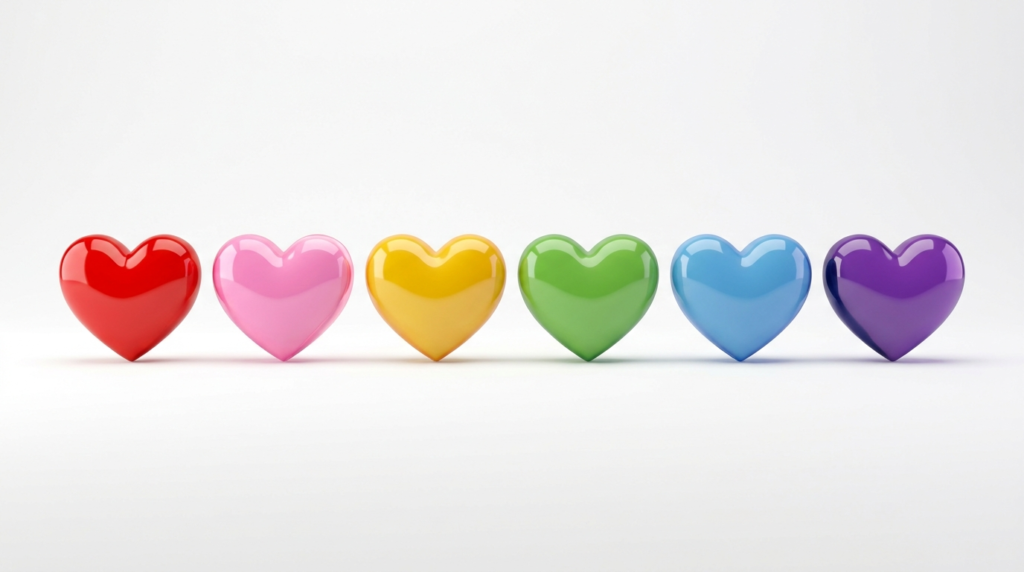
Use this chart for a quick look at the common meanings of heart colors.
| Heart emoji | Common meaning | Example use |
|---|---|---|
| ❤️ Red | Love and romance | “Love you so much ❤️” |
| 🩷 Pink | Sweet affection | “You’re so kind 🩷” |
| 🧡 Orange | Warmth and care | “Thanks for being there 🧡” |
| 💛 Yellow | Friendship and joy | “My favorite person to laugh with 💛” |
| 💚 Green | Nature and growth | “Love this green garden 💚” |
| 💙 Blue | Trust and loyalty | “Always here for you 💙” |
| 💜 Purple | Admiration and affection | “You’re amazing 💜” |
| 🖤 Black | Dark humor or sadness | “That movie was heartbreaking 🖤” |
| 🤍 White | Peace and comfort | “Sending you peace 🤍” |
| 🤎 Brown | Warmth and nature | “Cozy autumn vibes 🤎” |
| 🩶 Gray | Quiet care or neutral feelings | “Thinking of you 🩶” |
| 🩵 Light blue | Calm, gentle affection | “Love the ocean 🩵” |
These descriptions reflect common usage. People may give the same color a personal meaning, so there is no single correct choice for every conversation.
💕 Popular Heart Emoji Combinations and Meanings
Heart emojis can take on a slightly different tone when paired with other symbols. Here are some combinations that work well in messages and captions.
| Emoji combination | Common meaning |
|---|---|
| ❤️🥰 | Love, warmth, and affection |
| 💕✨ | Sweet love or a special moment |
| 💛😊 | Friendship and happiness |
| 💙🤝 | Trust, teamwork, or support |
| 💚🌿 | Nature and environmental care |
| 💜🦋 | Affection, beauty, or personal growth |
| 🖤🥀 | Sadness, heartbreak, or a dark aesthetic |
| 🤍🕊️ | Peace, comfort, or remembrance |
| 🤎☕ | Cozy feelings and warm drinks |
| 🩷🎀 | Sweetness, cuteness, or a playful style |
Example Messages
Friendly: “So grateful to have you in my life 💛😊”
Romantic: “Every day with you feels special ❤️🥰”
Supportive: “You don’t have to face this alone 💙🤝”
Nature-themed: “Let’s take care of our planet 💚🌿”
Likely meaning: The second emoji adds detail to the feeling or topic. The exact meaning still depends on the message and the person sending it.
💗 Which Heart Emoji Should You Use?
Choose a heart that fits the feeling you want to share.
- For love: Use ❤️ or 🩷.
- For a close friend: Try 💛, 💙, or 🧡.
- For family: Use ❤️, 🩷, or 🤍.
- For encouragement: Try 💙 or 🧡.
- For nature and the environment: Use 💚.
- For comfort or sympathy: Try 🤍.
- For a cozy mood: Use 🤎.
- For dark humor or an alternative style: Try 🖤.
- For a purple-themed post: Use 💜.
- For a soft, calm look: Use 🩵 or 🩶.
Quick Tip: If you’re unsure which color to send, choose the one that feels natural for your relationship. A simple, sincere message matters more than finding a perfect color.
📋 Copy and Paste Heart Emojis
Here are the main heart colors ready to copy and use in texts, captions, comments, and messages.
Red: ❤️
Pink: 🩷
Orange: 🧡
Yellow: 💛
Green: 💚
Blue: 💙
Light blue: 🩵
Purple: 💜
Black: 🖤
White: 🤍
Brown: 🤎
Gray: 🩶
Ready-to-Use Examples
- “Sending you lots of love ❤️”
- “Best friends forever 💛”
- “Proud of you and all your hard work 💙”
- “A little kindness goes a long way 🩷”
- “Protect the planet 💚”
- “Wishing you peace and comfort 🤍”
You can copy any heart above and paste it into a message or social media post. Its appearance may vary slightly across devices and apps.
🔎 Heart Emoji Names and Unicode Details
Unicode assigns standard names and code points to emoji characters. These details identify the characters, but they do not set a fixed emotional meaning for each color.
| Emoji | Official name | Unicode code point |
|---|---|---|
| ❤️ | Red Heart | U+2764 |
| 🩷 | Pink Heart | U+1FA77 |
| 🧡 | Orange Heart | U+1F9E1 |
| 💛 | Yellow Heart | U+1F49B |
| 💚 | Green Heart | U+1F49A |
| 💙 | Blue Heart | U+1F499 |
| 🩵 | Light Blue Heart | U+1FA75 |
| 💜 | Purple Heart | U+1F49C |
| 🖤 | Black Heart | U+1F5A4 |
| 🤍 | White Heart | U+1F90D |
| 🤎 | Brown Heart | U+1F90E |
| 🩶 | Grey Heart | U+1FA76 |
Technical note: The red heart is listed as U+2764 in Unicode. The displayed ❤️ form commonly includes a variation selector that requests emoji-style presentation.
❓ Frequently Asked Questions
1. What is the most common heart emoji meaning?
The heart emoji usually expresses love, affection, care, or support. The color can add a different tone, but the message and relationship help determine its meaning.
2. Which heart color means true love?
The red heart ❤️ is widely associated with romantic love and deep affection. However, no emoji color proves that a person’s feelings are sincere. Their words and actions provide more useful clues.
3. Does a yellow heart mean friendship?
A yellow heart 💛 often represents friendship, happiness, and positive feelings. It can also be used by family members or romantic partners.
4. What does a purple heart mean from a guy?
A purple heart 💜 may express affection, admiration, friendship, or romantic interest. The sender’s usual texting style and the conversation provide better clues than the color alone.
5. What does a black heart mean in texting?
A black heart 🖤 can express dark humor, sadness, grief, or affection with a dramatic style. It can also match an alternative or gothic aesthetic.
6. Does a white heart mean sympathy?
A white heart 🤍 can express sympathy, comfort, peace, and gentle affection. It is sometimes used in memorial messages, but its meaning depends on the situation.
7. Can heart colors have different meanings on social media?
Yes. People may use a heart to match a photo, outfit, fandom, brand, or personal style. Captions and community habits can also affect its meaning.
8. Does sending a red heart mean someone likes me romantically?
Not always. A red heart can express romantic love, but it is also common between friends and family members. Look at the broader conversation instead of relying on one emoji.
Conclusion
The emoji heart color meaning guide shows how different colors can express love, friendship, kindness, trust, support, comfort, and many other feelings. Red often signals love, yellow is common for friendship, green can relate to nature, and white may express peace or sympathy. Pink, orange, blue, purple, black, brown, gray, and light blue hearts each offer their own range of common uses.
The best way to interpret a heart is to consider the words around it, your relationship with the sender, and the setting. If you want to send a heart yourself, choose a color that fits your message and feels natural to you. A heart emoji can add warmth to your words, but the message itself gives it meaning.

James Whitmore is an emoji meanings writer at Emojixa.com. He writes simple guides about emoji meanings, texting expressions, and emoji combinations to help readers understand how emojis are used in everyday conversations, friendships, and relationships.